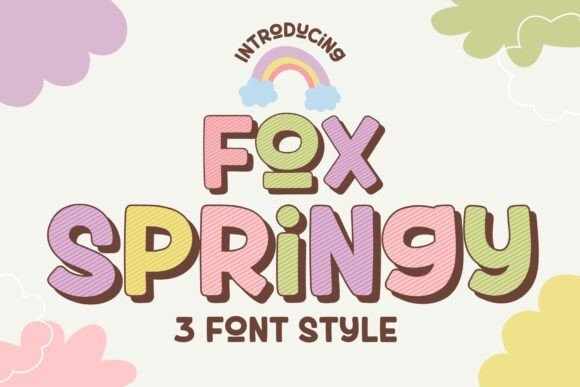
Fox Springy Display Font for Playful Editorial Design
It started with a newsletter header — the kind that sits at the top of a seasonal lifestyle roundup, just above a soft photo of sunlit herbs and handwritten recipe notes. I’d been testing fonts for weeks: some too stiff, some too fussy, others too quiet to hold attention without overwhelming the voice behind the words. Then I opened Fox Springy, typed “Spring Gatherings,” and paused. Not because it was loud — but because it felt *alive*. That’s the quiet magic of this display font: it doesn’t shout; it bounces, leans in, and invites.
Fox Springy for Lifestyle Blog Headers and Reader-Friendly Branding
Fox Springy is a display font built for moments where tone matters as much as text. Its Regular style delivers a clean, bold look — not rigid or mechanical, but warm and rhythmically confident. In my blog redesign, I used it exclusively for the main header and seasonal feature titles (like “Summer Slow Living” or “Cozy Kitchen Rituals”). The letterforms have gentle contrast and open counters, which means they breathe well on screen — even at smaller sizes on mobile. It’s not a body font, and it shouldn’t be: its charm lives in scale, spacing, and intention. But as a header typeface? It sets the mood before the first sentence lands. Readers don’t just see the title — they feel its lightness, its sincerity, its subtle whimsy. That consistency across posts helps reinforce brand identity without repeating logos or color palettes.
Fox Springy in Recipe Ebooks and Printable Planners
When designing a digital recipe ebook last month, I needed something that honored the handmade spirit of home cooking without veering into cliché script territory. Fox Springy stepped in perfectly for chapter openers (“Bread & Butter,” “Herbs & Honey”) and section dividers. Its three included styles — Regular, plus two complementary variations (one slightly more condensed, another with lifted terminals) — gave me flexibility without clutter. I paired it with a relaxed serif font for body copy and a crisp sans serif for ingredient lists and timings. The result? A visual hierarchy that guides the eye naturally: Fox Springy draws attention, the serif supports readability, and the sans keeps utility clear. For printable planners, the same principle applies — use Fox Springy for weekly headers or themed sections (“Mindful Mornings,” “Creative Hours”), then step back with neutral, highly legible fonts for checkboxes, notes, and time blocks.
Fox Springy for Wedding Guides and Elegant Digital Magazines
I recently helped format a small-run wedding guide PDF — part editorial, part practical — meant for couples planning intimate celebrations. We wanted warmth, elegance, and personality, but not florid ornamentation. Fox Springy became our cover font and section title anchor. Its lively energy works beautifully alongside delicate line art, muted photography, and generous white space. Because it’s a display font, not a script or decorative dingbat, it reads instantly — no squinting, no decoding. On screen and in print-ready PDFs, it holds weight without heaviness. And crucially, it scales gracefully: large enough for impact on a magazine cover, refined enough for a pull quote inset on a double-page spread. Just remember — like most expressive display fonts, Fox Springy isn’t designed for dense captions or footnotes. Save those for a trusted serif or humanist sans.
Fox Springy Font Pairing for Editorial Layouts and Course PDFs
Pairing Fox Springy thoughtfully makes all the difference. In a coaching workbook I designed, I used it for module titles and reflective prompts (“What Feels Light This Week?”), then grounded everything with a warm, low-contrast serif for exercises and journaling space. For course PDFs — especially those exported from Canva or Adobe InDesign — ensure your file includes the full Fox Springy family (Regular + the two additional styles). Check licensing: if you’re bundling fonts with paid digital products or client deliverables, confirm commercial use rights. Most importantly, test how it renders across devices. I found Fox Springy exports cleanly to PDF with embedded outlines, and displays reliably in modern browsers — no fallback surprises. It’s not a web font by default, so for live blogs or newsletters hosted on platforms like Substack or Mailchimp, use it in static graphics (headers, banners, quote cards), not live text — unless you’ve uploaded it via custom CSS or a supported font service.
Fox Springy for Newsletter Graphics and Social Media Teasers
One unexpected win? Using Fox Springy in newsletter graphics — especially teaser images shared to Instagram or Pinterest. Its eye-catching quality translates well to small thumbnails: the letter shapes retain character even when scaled down to 400px wide. I created a set of “Quote of the Week” cards using the Regular style over linen-textured backgrounds, and engagement spiked — readers told me the typography made them pause mid-scroll. That’s the power of a considered display font: it doesn’t just say something — it creates a moment. As with all fonts meant for visual emphasis, restraint is key. Use Fox Springy where you want resonance, not repetition. Let it shine in titles, invitations, covers, and intentional accents — then let quieter, more functional fonts carry the rest.