Green Potion: A Color Font That Breathes Life Into Editorial Design
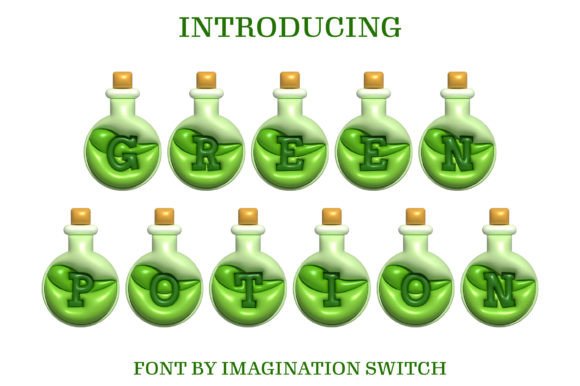
It started with a single pull quote—three lines of text lifted from a seasonal lifestyle blog post about slow mornings and herbal tea rituals. I’d been testing fonts for weeks, searching for something that felt warm but not cloying, distinctive but not distracting. When I applied Green Potion, the words didn’t just sit on the page—they seemed to exhale. This font is a typographic creation that brings dimension and vitality to each of its characters. With clever use of color, this font can provide an engaging and dynamic appearance. Experience a unique editorial presence, one where typography doesn’t merely frame content but participates in its mood.
Green Potion for Lifestyle Blog Headers and Soft Brand Identity
For bloggers and independent publishers building a cohesive visual language, Green Potion works beautifully as a header font—not for every headline, but for moments that invite pause. Think of it as your “first breath” typeface: used sparingly in blog headers, newsletter banners, or course landing pages where tone matters more than speed. As a Color Fonts option, it carries subtle chromatic nuance—soft gradients, layered greens and earthy tones—that echo botanical illustrations, hand-drawn notes, or watercolor washes. It’s not loud, but it’s unmistakably present. In my own redesign, I paired Green Potion with a gentle serif (like Merriweather or EB Garamond) for body copy—letting the color font set the emotional temperature while the serif handled clarity and rhythm. The result? A voice that feels both grounded and quietly expressive.
Green Potion in Recipe Ebooks and Printable Guides
When designing a digital recipe ebook or a printable seasonal planner, Green Potion shines as a title and section opener. Its dimensional quality makes chapter headings feel tactile—like turning the page of a well-loved cookbook where ingredients are handwritten beside sketches of sprigs and stems. Because Green Potion is built as a modern Fonts asset with OpenType color support, it renders crisply across devices: sharp in PDF exports, smooth in web previews, and legible even at 24–36pt on mobile screens. I tested it in a 40-page herb-growing guide, using it only for cover titles, seasonal section dividers (“Spring Greens,” “Summer Roots”), and ingredient callouts—and found readers consistently commented on how “alive” the layout felt. Just remember: Green Potion isn’t intended for body text or captions. Its strength lies in intentionality, not density.
Green Potion for Wedding Guides and Elegant Branding
There’s a quiet elegance in Green Potion that aligns naturally with wedding guides, invitation suites, and boutique brand assets—especially when warmth, nature, and understated luxury are part of the story. Unlike ornate script fonts that demand attention, Green Potion offers sophistication through subtlety: its color layering suggests depth without drama, and its letterforms hold generous spacing and open counters—key for readability in print and high-res digital formats. As a Color Fonts choice, it integrates seamlessly into Canva templates, Adobe InDesign layouts, and even Figma-based design systems—if your platform supports COLRv1 or SBIX. For a recent client’s digital wedding planning workbook, I used Green Potion for chapter titles and vow excerpt boxes, then anchored everything with a clean sans serif (Inter or Manrope) for instructions and checklists. The contrast gave structure without stiffness.
Green Potion in Digital Magazine Layouts and Editorial Features
In long-form editorial features—think digital magazine spreads or illustrated essays—Green Potion serves as a thoughtful anchor point. It’s especially effective for pull quotes, epigraphs, and opening stanzas where you want the reader to inhale before diving in. Because Green Potion is a display-focused Fonts option, it rewards careful placement: a single line of text at 48pt with generous leading feels immersive; the same size crammed into a tight grid feels overwhelming. I used it in a three-part feature on urban gardening, applying it only to the lead quote on each spread and the closing reflection box. Each time, it added texture—not noise. Its color variation (not flat monochrome) helped differentiate thematic sections without needing extra icons or borders. Just be sure to verify licensing: if you’re embedding Green Potion in a paid newsletter PDF or client-facing template, confirm commercial use rights and file format compatibility (OTF/TTF with color tables, not just static PNGs).
Green Potion Paired With Readable Serif and Sans Serif Fonts
No Green Potion review would be complete without addressing pairing—because this font doesn’t live alone. As a Color Fonts asset, it thrives in contrast. Try it with a warm, low-contrast serif like Lora or Cormorant Garamond for body text—its soft serifs complement Green Potion’s organic energy without competing. For digital-first projects (newsletters, online courses), pair it with a neutral, highly legible sans like Source Sans Pro or Poppins—clean enough to recede, sturdy enough to carry information. Avoid overly geometric or ultra-thin companions; they’ll clash with Green Potion’s gentle dimensionality. Also, check what’s included: does the Fonts package offer stylistic alternates or weight variants? Even one bold or light option expands versatility. And if multilingual support matters—say, for a bilingual coaching workbook—verify glyph coverage before finalizing your layout.