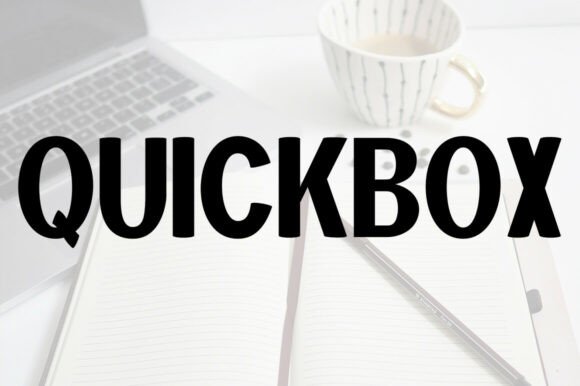
Quickbox Font: Playful Script Handwritten Fonts for Modern Makers
It started with a candle label. I’d just poured my first small-batch lavender-vanilla soy candles and needed something warm, inviting, and unmistakably handmade — not stiff, not corporate, not overly cutesy. That’s when I opened my font library and clicked on Quickbox. Instantly, the smooth, rounded strokes and expressive letters felt like a breath of fresh air — like handwriting from a friend who knows how to make joy look effortless. As a crafter who designs everything from greeting cards to printable wall art and boutique packaging, I knew right away: Quickbox wasn’t just another script handwritten font. It was the kind of display font that makes your shop feel intentional, cheerful, and quietly confident.
Quickbox for Candle Labels and Handmade Product Packaging
When you’re hand-pouring candles or assembling gift sets, every detail matters — especially typography. Quickbox shines on candle labels because its generous x-height and open letterforms stay legible even at 10–12pt on a 2” x 3” kraft sticker. I tested it on matte vinyl labels printed through my home printer and cut on my Cricut Maker — no jagged edges, no awkward spacing. The playful curves add warmth without sacrificing clarity, and because Quickbox is a script handwritten font built for display use, it avoids the thin, fragile lines that often break on small adhesive tags. Pair it with a clean sans serif (like Montserrat or Poppins) for ingredients or scent notes — and suddenly your packaging feels cohesive, professional, and full of personality.
Quickbox for Wedding Invitations and Elegant Branding
Wedding stationery demands both charm and polish — and Quickbox walks that line beautifully. Its expressive letters carry casual creativity while still feeling refined enough for a rustic-chic welcome board or a foil-stamped invitation suite. As a printable creator, I used Quickbox for “Mr. & Mrs.” on a digital wedding invitation template, then layered it over soft watercolor textures in Canva. Because it’s a premium font designed with ligatures and alternate characters, swapping in a swash capital “W” or a flowing “&” took seconds — no manual tweaking. Just remember: Quickbox works best for names, titles, and short phrases (not body text), so pair it with a simple serif font for RSVP details or timeline copy. And yes — it’s fully licensed for commercial use, so you can sell those digital invites or print-on-demand stationery with confidence.
Quickbox for Greeting Cards and Seasonal Printable Wall Art
There’s something magical about seeing Quickbox bloom across a holiday card or spring-themed planner page. Its rounded strokes soften sharp corners, making “Happy Birthday,” “You’re Loved,” or “Hello Spring” feel sincere and unhurried. I designed a set of six printable wall art pieces for a farmhouse-style nursery — all using Quickbox as the focal phrase, paired with gentle line art. Printed on textured cardstock, the font’s organic rhythm made each piece feel hand-lettered, even though it was digital. For seasonal craft sellers, this is gold: Quickbox reads well on social media previews, Etsy listing images, and physical prints alike — and because it’s a script handwritten font with strong visual consistency, your brand voice stays recognizable across every product drop.
Quickbox for Stickers, Tote Bags, and Boutique Tags
If you cut vinyl, print iron-ons, or design SVG files for Silhouette users, you’ll appreciate how Quickbox holds up at scale. I ran it through my cutting machine at 1.5”, 3”, and 6” sizes — no overlapping paths, no collapsed counters. The font includes OpenType features like contextual alternates and swashes, so you can easily swap in a bouncy “g” or a looping “y” for extra flair on a tote bag design or enamel pin mockup. Bonus: its friendly, modern vibe translates seamlessly across mediums — whether it’s heat-pressed onto organic cotton or die-cut as a kiss-cut sticker sheet. Just avoid ultra-thin outlines or tiny kerning adjustments if you’re prepping for cutting machines; stick to the default spacing and let Quickbox’s natural rhythm do the work.
Quickbox for Digital Downloads and Planner Page Design
As someone who creates printable planners and habit trackers, I need fonts that look great on screen *and* print crisp on home printers. Quickbox delivers — its bold, rounded terminals prevent ink bleed on standard copy paper, and its consistent weight keeps headings balanced against lighter body fonts. I used it for section headers (“Weekly Intentions,” “Gratitude Log”) and paired it with a light sans serif for checkboxes and prompts. Since Quickbox is a display font optimized for impact, not long paragraphs, it guides the eye without overwhelming the layout. And because it comes in standard OTF/TTF formats with full commercial licensing, I can bundle it into editable Canva templates or include usage notes for buyers — no legal guesswork.
What to Check Before You Use Quickbox Fonts Commercially
- Licensing: Confirm your license covers physical products, digital downloads, and resale — most versions do, but always double-check the terms.
- File Formats: Look for OTF and TTF files — they’re universally compatible with Cricut Design Space, Silhouette Studio, Adobe apps, and Canva.
- Extras: Swashes, ligatures, and stylistic alternates are included in many Quickbox packages — explore them in your glyph panel before finalizing a design.
- Pairing Tip: Balance Quickbox’s playfulness with a grounded sans serif (like Inter or Lato) or a quiet serif (like Merriweather) — never another competing script.