Tiny Script: A Fresh, Clear Handwritten Font for Digital Design
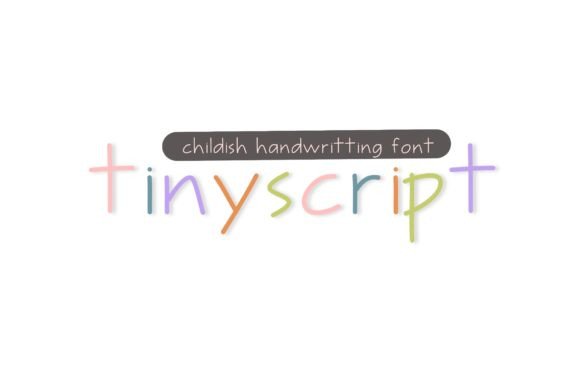
As a web designer who ships landing pages, SaaS dashboards, and boutique e-commerce sites weekly, I reach for Tiny Script when I need a Script Handwritten font that feels human but never messy—light enough to breathe on screen, precise enough to earn trust. Tiny Script isn’t just another decorative script; it’s a Fonts choice built for clarity first. Its lines are clean, its rhythm even, its personality quietly confident—not playful in a childish way, not formal in a stiff way, but simple, clear and fresh, exactly as described. That balance makes it unusually versatile across digital surfaces where legibility and tone must coexist.
Tiny Script for Hero Section Headlines and Landing Page Titles
When visitors land on your page, the first 3 seconds decide whether they stay or scroll. Tiny Script works powerfully here—not as body text, but as a primary headline font that communicates warmth without sacrificing professionalism. Because it’s a Script Handwritten typeface with restrained contrast and open counters, it renders crisply at 48px+ on desktop and remains legible down to 36px on mobile—especially when paired with generous letter-spacing and a high-contrast background (white text on deep navy, for example). Use Tiny Script for your hero title, then drop into a neutral sans serif like Inter or Manrope for subhead and CTA copy. This pairing creates instant visual hierarchy while keeping the emotional hook intact.
Tiny Script for Online Store Banners and Product Launch Graphics
E-commerce brands—especially in wellness, ceramics, stationery, or slow-living niches—rely on authenticity. Tiny Script delivers that instantly. Unlike overly ornate scripts that distract from product photography, Tiny Script adds subtle humanity to banners without competing. Try it over a soft-focus lifestyle image: “New Summer Collection” in Tiny Script, set at 42px with 1.5px tracking, overlaid on a light cream gradient. It reads as intentional, not improvised. As a Fonts asset, it scales cleanly across Shopify banner zones, Instagram Story ads, and email header graphics—no pixelation, no rendering lag, especially when served as WOFF2 via modern CDN delivery.
Tiny Script for Coaching Website Headers and Brand-Focused Web Experiences
Coaches, consultants, and creative entrepreneurs need typography that reflects empathy and expertise in equal measure. Tiny Script fits this niche because it’s simple, clear and fresh—not cutesy, not cold. On a coaching site’s “About” section header, it signals approachability without undermining authority. Pair it with a warm, low-contrast serif like Lora for paragraph text to reinforce editorial credibility—or with a geometric sans like Poppins for a more contemporary, app-like feel. As a Script Handwritten font, it avoids the sterility of all-sans layouts while maintaining tight vertical rhythm—critical for long-scrolling service pages.
Tiny Script for Digital Course Sales Pages and Email Opt-In Headlines
Conversion-focused layouts live or die by perceived sincerity. Tiny Script helps build that perception fast. When used for short, benefit-driven headlines—“Start Your First Design System,” “Get Instant Access”—it feels handwritten in the best way: intentional, personal, unhurried. Avoid using Tiny Script for buttons or form fields (stick with a highly legible sans for those), but deploy it for H2s above pricing tables or testimonial pull quotes. Its clarity ensures readers don’t second-guess what they’re seeing—even on a small mobile screen. As a Fonts resource, it supports standard Latin character sets needed for English, Spanish, and French course audiences, making it safe for global digital product launches.
Tiny Script for Portfolio Site Logos and Branded Web Content Sections
Your portfolio is your brand’s first impression—and Tiny Script works beautifully as logo text or section dividers when used intentionally. Because it’s simple, clear and fresh, it avoids dated script clichés while still conveying craft and care. Try it in all caps at 28px for a “Work” section divider, centered above a grid of case studies. Or use it at 18px as subtle caption text beneath a project thumbnail—just enough presence to guide the eye, not enough to dominate. As a Script Handwritten font, it pairs naturally with minimalist UI elements: thin borders, ample whitespace, muted palettes. Just ensure your webfont license covers self-hosted use on client sites if you’re a freelance designer bundling assets.
Tiny Script for Blog Headers and Social Media Graphic Text Overlays
Blog headers need personality without clutter—and Tiny Script delivers precisely that. Its even stroke weight and consistent x-height make it stable across varying line lengths. Use it for post titles (not article intros) in your CMS, set at 32px with line-height 1.3. For social media graphics, export as SVG or high-res PNG with Tiny Script text embedded—its clean curves hold up perfectly on Instagram carousels or Pinterest pins. As a Fonts file, confirm it includes OTF and WOFF2 formats for maximum compatibility. And yes—it’s a commercial font, so verify licensing covers redistribution in templates or client-facing digital products before bundling.
Tiny Script for Dark Mode Interfaces and Light Background Layouts
Many script fonts collapse visually on dark backgrounds—but Tiny Script holds up. Its open apertures and balanced spacing prevent ink-trap effects, making it one of the few Script Handwritten options that work reliably in both modes. For dark mode, use #e0e7ff (soft violet) instead of pure white for better contrast and reduced glare. On light backgrounds, avoid ultra-thin weights—Tiny Script shines at regular or medium weight, where its clear and fresh character reads cleanly against off-whites and warm beiges. Test it in your design system’s theme tokens early—this isn’t a font you want to discover fails at 2am before launch.
Practical Font Pairing Tips for Tiny Script in Web Design
- For editorial digital experiences: Pair Tiny Script with Lora (serif) for headings + body, using it only for H1/H2
- For SaaS dashboards: Use Tiny Script for empty-state illustrations (“No projects yet”) + Inter for everything else
- For responsive banners: Set Tiny Script at 42px/1.1 line-height on desktop, 34px/1.2 on tablet, 28px/1.25 on mobile
- For accessibility: Never use Tiny Script below 24px for non-decorative text—and always provide alt text for image-based usage