AZ Cut Script Font for Modern Web Design
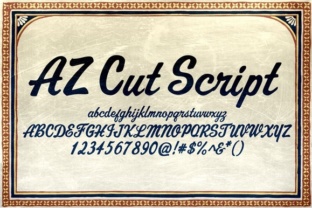
As a UI designer who ships pixel-perfect landing pages and branded web experiences, I reach for AZ Cut Script when I need a Script Handwritten font that feels human—not gimmicky—on screen. The AZ Cut Script has a clean hand drawn look with a bit of a calligraphic feeling to it, making it ideal for digital interfaces where warmth and intentionality matter. Unlike overly ornate script fonts that collapse at small sizes or clash with responsive layouts, AZ Cut Script delivers legibility without sacrificing personality. It’s not just another decorative Fonts download—it’s a deliberate design decision for brands that want to signal authenticity, craftsmanship, and approachable elegance.
AZ Cut Script for Hero Sections and Conversion-Focused Landing Pages
On high-stakes landing pages—think SaaS onboarding flows, course sales funnels, or boutique service launches—the first 3 seconds hinge on visual clarity and emotional resonance. AZ Cut Script excels here as a hero title font: its calligraphic rhythm guides the eye naturally, while its clean hand-drawn structure avoids visual noise. I use it at 48–64px on light backgrounds with generous letter-spacing (0.5–1.2px), always pairing it with a neutral sans serif like Inter or Manrope for body copy. This contrast builds immediate hierarchy: AZ Cut Script says “this is special,” while the supporting typeface says “you can trust this.” For conversion-focused layouts, I avoid using AZ Cut Script in buttons or form fields—its expressive nature works best for short, high-impact phrases like “Start Your Journey” or “Designed Just for You.”
AZ Cut Script for Online Store Banners and E-Commerce Branding
E-commerce designers often underestimate how much typography shapes perceived value. A luxury skincare brand, handmade jewelry shop, or slow-fashion label gains instant credibility with AZ Cut Script in banner headlines and collection headers. Because AZ Cut Script has a clean hand drawn look with a bit of a calligraphic feeling to it, it conveys artisanal care without looking dated or overly formal. On Shopify or WordPress themes, I apply it via @font-face with WOFF2 files for optimal load performance—and always test rendering on iOS Safari and Android Chrome. For banners over product images, I add subtle text shadow (1px black at 20% opacity) to ensure readability against busy backgrounds. Never stretch or distort AZ Cut Script: its charm lives in its natural flow.
AZ Cut Script for Portfolio Websites and Creative Brand Identity
If you’re a freelance designer, illustrator, or creative director building a portfolio site, AZ Cut Script becomes part of your voice—not just decoration. Its Script Handwritten quality makes project titles feel curated and intentional, especially when paired with minimalist grid layouts. I use it exclusively for section headers (“Work,” “About,” “Contact”) and never for navigation or footer links. Why? Because AZ Cut Script is a display font—not a workhorse. It thrives where attention is earned, not demanded. For dark-mode portfolios, I lighten the font weight slightly and increase contrast with a soft white (#F9F9F9) instead of pure white to reduce glare. And yes—it pairs beautifully with serif body fonts like Cormorant Garamond for editorial depth, or geometric sans serifs like Poppins for contemporary balance.
AZ Cut Script for Blog Headers and Branded Content Sections
Blog headers set tone before a single word is read. When your content centers on wellness, creativity, or mindful entrepreneurship, AZ Cut Script signals warmth and sincerity better than any stock script font. I use it only for H1s and featured quote pullouts—not body paragraphs or captions. Its calligraphic influence adds gentle movement, encouraging readers to pause and absorb. On mobile, I scale it responsively: 36px on desktop drops to 28px on tablets and 24px on phones—always testing line-height (1.3–1.4) to prevent crowding. Bonus tip: if your CMS supports custom CSS classes, assign AZ Cut Script to .featured-title or .intro-quote rather than global heading tags—preserving semantic HTML and accessibility.
AZ Cut Script for Digital Ads and Social Media Graphics
In fast-scrolling environments like Instagram feeds or email banners, AZ Cut Script stands out because it feels *drawn*, not generated. Its clean hand-drawn aesthetic cuts through algorithmic noise while maintaining professionalism—critical for paid campaigns targeting conscious consumers or creative professionals. I export graphics with AZ Cut Script as outlined vector text (not rasterized) to preserve crispness across devices. For animated banners, I animate letter reveal—not tracking—to honor its organic rhythm. Avoid pairing it with more than one other font in ads; simplicity amplifies impact. And remember: AZ Cut Script is licensed for commercial use—including client projects, templates, and digital assets—so you can confidently embed it in Figma kits, Notion brand systems, or Canva templates.
AZ Cut Script for Logo Text and Minimalist Brand Kits
While not a full-logo solution on its own, AZ Cut Script shines as primary logotype text for studios, coaching practices, or indie brands prioritizing clarity and character. Its calligraphic subtlety avoids cliché while its clean hand-drawn structure ensures scalability—even down to favicon size (when simplified). In brand kits, I treat AZ Cut Script as the “voice” layer: used only for logotypes, signature lines, or monogram accents. All supporting typography remains strictly functional (e.g., mono-spaced for code snippets, geometric sans for UI labels). Licensing is straightforward: one purchase covers web, app, and digital template usage—no per-page fees or subscription traps. That reliability matters when shipping client sites or launching your own product.
AZ Cut Script for Responsive Buttons and Interactive UI Elements
Use AZ Cut Script sparingly in interactive elements—but strategically. I’ve seen it elevate “Book a Call” or “Get the Guide” buttons on coaching sites when applied as a secondary hover state (default = sans serif, hover = AZ Cut Script at 90% opacity). This micro-interaction creates delight without compromising usability. Never use it for disabled states or error messages—clarity trumps charm there. Also: verify glyph coverage includes standard punctuation, numerals, and common accented characters if serving multilingual audiences. Most importantly, test tap targets on mobile—AZ Cut Script’s flowing forms demand at least 44×44px minimum touch area for accessibility compliance.