Timber Woodgrain Font: Hand-Drawn Wood Texture for Editorial Design
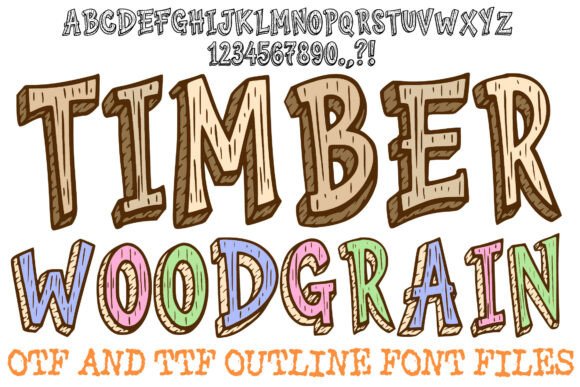
Timber Woodgrain is a Decorative display font that transforms editorial projects with its tactile, forest-inspired presence — a hand-drawn typeface where each character feels carved, stacked, and textured like reclaimed timber. As a Fonts resource built for creators who value authenticity over automation, Timber Woodgrain delivers chunky, 3D block letters with visible grain, subtle depth, and organic irregularity — ideal for designers who craft blogs, magazines, ebooks, newsletters, and printable guides where tone and texture matter as much as typography.
Timber Woodgrain for Magazine Covers and Print-First Editorial Identity
Timber Woodgrain anchors magazine covers with grounded visual authority — not sleek or sterile, but warm, dimensional, and quietly confident. Its hand-drawn weight holds up beautifully at large sizes on newsstand displays and PDF exports, while the woodgrain texture adds tactile richness without sacrificing legibility. Use it for mastheads, cover lines, or seasonal issue titles (e.g., “Autumn Issue” or “Rooted Living”) to signal craftsmanship and intentionality. Because Timber Woodgrain is a Decorative font designed for impact, not extended reading, pair it with a sturdy serif like Adobe Garamond or a clean sans serif like Inter for body copy — creating hierarchy that guides the eye without competing for attention.
Timber Woodgrain for Ebook Titles and Chapter Openers
When readers open your ebook — whether it’s a wellness workbook, nature journaling guide, or slow-living manifesto — Timber Woodgrain sets the mood before the first sentence. Its 3D block characters lend gravitas to titles, while subtle woodgrain variation across glyphs prevents monotony in repeated use (like “Chapter Three” or “Reflection Prompt”). As a Fonts choice for digital publishing, Timber Woodgrain embeds cleanly in EPUB and PDF formats and renders consistently across Kindle, Apple Books, and desktop readers. For chapter openers, set Timber Woodgrain at 48–60pt over ample white space, then follow with a light-weight serif for body text — reinforcing rhythm, pause, and invitation to read deeper.
Timber Woodgrain for Newsletter Headers and Lead Magnet Graphics
In crowded inboxes, Timber Woodgrain cuts through noise — not with brightness, but with warmth. Use it for newsletter headers (“This Week in Rooted Living”), subject line previews (as image-based text), or lead magnet covers (e.g., “Free Printable Forest Journal Pages”). Because it’s a hand-drawn display alphabet, Timber Woodgrain conveys approachability and human scale — essential for creator-led newsletters where trust and voice drive engagement. When exporting for email clients, convert Timber Woodgrain text to outlines or embed as SVG to preserve texture fidelity. Pair with a highly legible sans serif (like Open Sans or Lato) for subheaders and CTAs — balancing personality with practicality.
Timber Woodgrain for Quote Graphics and Social Media Story Highlights
Timber Woodgrain excels where brevity meets resonance: pull quotes, Instagram story highlights, Pinterest quote cards, and Substack post previews. Its chunky, textured characters make short phrases feel substantial — “Breathe Deeply,” “Grow With Intention,” “Unplug to Reconnect.” Unlike overly ornate script fonts, Timber Woodgrain maintains clarity even at smaller mobile sizes (down to 28pt with generous letter spacing). As a Decorative font, it works best when isolated — one phrase per graphic, centered, with muted natural tones (oak brown, sage green, parchment cream) — letting the woodgrain texture breathe rather than compete.
Timber Woodgrain for Printable Planners, Worksheets, and Coaching Resources
For printables — habit trackers, seasonal reflection sheets, forest bathing checklists — Timber Woodgrain adds artisanal credibility. Its hand-drawn imperfection signals care, not automation; readers feel they’re holding something made, not generated. In PDF printables, Timber Woodgrain scales cleanly to A4 and letter sizes and retains grain detail when printed on uncoated or recycled paper stock. Use it sparingly: section headers (“Week One Intentions”), title bars (“Mindful Morning Ritual”), or decorative dividers — never for body text or fine print. Always verify commercial licensing before bundling Timber Woodgrain into paid templates, client deliverables, or downloadable course assets.
Timber Woodgrain for Blog Post Headings and Lifestyle Branding
A lifestyle blog about gardening, cabin culture, or mindful making gains immediate cohesion with Timber Woodgrain as its H1 treatment. Its forest-derived aesthetic aligns seamlessly with themes of growth, grounding, and handmade living — no forced metaphors required. Apply it consistently across featured posts, category banners, and archive headers to reinforce brand identity. For responsive web use, serve Timber Woodgrain as a webfont via @font-face with fallbacks (e.g., “Timber Woodgrain, ‘Segoe UI’, system-ui”) and test rendering on iOS Safari and Android Chrome. Avoid using it for navigation menus or paragraph text — this is a Fonts asset meant for emphasis, not endurance.
Timber Woodgrain for Wedding Invitations and Elegant Branding
Timber Woodgrain brings rustic refinement to wedding stationery — especially for woodland ceremonies, barn receptions, or eco-conscious couples seeking warmth over formality. Its 3D block characters lend ceremony to names and dates, while the woodgrain texture echoes invitations printed on kraft paper or engraved on reclaimed wood. As a Decorative font, it shines in combination: pair “Emma & James” in Timber Woodgrain with delicate serif accents (e.g., Playfair Display) for details like time, location, and RSVP instructions. Confirm multilingual support if needed for bilingual vows or guest names — and always secure an extended commercial license for physical print runs and digital sharing.
Practical Notes for Editorial Designers Using Timber Woodgrain
- Timber Woodgrain is a single-weight display font — ideal for headlines, not body text or UI labels.
- Includes standard Latin characters, numerals, and basic punctuation; verify glyph coverage for diacritics if publishing multilingual content.
- No italic or condensed variants — embrace its singular, intentional voice instead of forcing flexibility.
- Licensing covers commercial use in ebooks, templates, newsletters, and client work — but requires explicit permission for resale as part of a font bundle.
- For best results, use with generous tracking (+50–100) and avoid tight kerning — let the woodgrain texture speak.