Vine: A Decorative Display Font for Editorial Impact
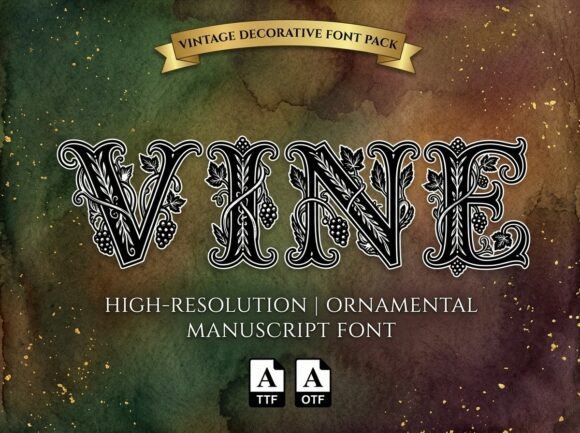
As a publisher and editorial designer who crafts blogs, digital magazines, and branded printables, I rely on Vine not just as another decorative font—but as a deliberate visual anchor. This font is a stunning decorative display font designed to be the center of attention. Featuring unique artistic elements and a strong visual personality, this font is perfect for creators who want to signal tone, intention, and authority before a single word is read. Vine isn’t built for body text or long-form readability—it’s engineered for moments that stop scrolling, invite pause, and reinforce brand voice across every touchpoint.
Vine for Magazine Covers and Print-First Editorial Identity
When your magazine cover lands in an inbox, appears on a tablet, or sits on a coffee table, Vine delivers immediate distinction. Its decorative character—balanced curves, intentional contrast, and expressive terminals—makes it ideal for mastheads, issue titles, and feature headlines in both digital and print formats. Unlike generic script fonts or overused serifs, Vine carries editorial weight without sacrificing originality. For quarterly lifestyle publications or niche creator zines, pairing Vine with a crisp serif like Adobe Garamond or a neutral sans like Inter creates clear hierarchy: Vine sets the mood; the supporting typeface ensures legibility. Always test Vine at 36pt+ for print and verify kerning in PDF exports—its artistic spacing shines when given room to breathe.
Vine for Ebook Titles and Chapter Openers in Digital Publishing
In ebooks—especially those sold on Amazon KDP, Gumroad, or Teachable—first impressions happen in thumbnail size. Vine performs exceptionally well as a title font because its decorative strength reads clearly even at small scale, provided it’s used sparingly and intentionally. Use it for the main ebook title on the cover, then echo it subtly in chapter openers (e.g., “Chapter Three” in Vine, followed by body copy in a highly readable serif). Avoid using Vine for subtitles or running headers—it’s not a workhorse font, but a signature one. As a decorative font, Vine supports narrative tone: a wellness guide gains warmth, a poetry collection gains lyrical gravity, and a design workbook gains craft-forward credibility—all without changing a single word of copy.
Vine for Newsletter Headers and Subscriber Engagement Graphics
Your newsletter subject line gets milliseconds. Your header image gets one scroll-stop. That’s where Vine earns its place among premium fonts. When layered over a muted photo background or placed cleanly on a solid color block, Vine commands attention without shouting. It works especially well for seasonal campaigns (“Summer Slow Living”), limited-edition launches (“Issue 07: Analog Focus”), or subscriber-exclusive quote graphics. Because Vine is a decorative font built for impact—not utility—it pairs best with clean, low-contrast sans serifs (like Poppins or Lato) for body text and captions. Test rendering across email clients: Vine embeds reliably in HTML emails when served via @font-face, and converts cleanly to outlined text for PNG/SVG assets used in Mailchimp or Beehiiv.
Vine for Printable Guides, Workbooks, and Lead Magnets
Whether you’re designing a recipe workbook, a journaling prompt pack, or a brand strategy worksheet, Vine elevates perceived value instantly. Its artistic elements lend handmade authenticity—even in digital-first deliverables—while its strong visual personality helps differentiate your freebie from generic Canva templates. Use Vine for section dividers (“Week One”, “Your Core Values”), cover titles, and pull-quote callouts. For printables intended for home printing, confirm Vine includes standard Latin glyphs and basic punctuation—no missing accents or broken ligatures. And crucially: ensure your license covers commercial use. Vine is licensed for distribution in paid and free digital downloads, so whether your lead magnet lives behind a Mailchimp form or inside a Notion template bundle, you’re covered.
Vine for Quote Graphics and Social Media Story Highlights
Readers don’t just consume content—they save, share, and screenshot moments that resonate. Vine transforms short, powerful statements into visual keepsakes. Its decorative rhythm gives quotes texture and memorability, especially when set against minimalist backgrounds or soft gradients. On Instagram Stories or Pinterest pins, Vine scales beautifully at 48–72pt. For accessibility, always pair it with sufficient contrast (minimum 4.5:1 against background) and avoid placing Vine text over busy imagery without a subtle drop shadow or semi-opaque overlay. As a display font, Vine shouldn’t carry full paragraphs—but one sentence, centered, in Vine? That’s shareable typography.
Vine for Branding Consistency Across Blogs and Content Series
If your blog or digital publication has a recurring series—“Foundations Friday”, “Toolbox Tuesdays”, or “Interview Archive”—Vine becomes your typographic signature. Using it consistently for series headers builds recognition faster than color or icon alone. Because Vine is a decorative font with unmistakable character, it reinforces voice: thoughtful, intentional, human-made. Apply it across blog post titles (as H1), newsletter banners, and even podcast episode thumbnails—and pair it with the same secondary font family each time. That repetition, anchored by Vine’s visual personality, tells readers they’re in a trusted space. Just remember: consistency doesn’t mean uniformity. Adjust Vine’s tracking or size per context—tighter for social avatars, looser for print covers—to preserve its elegance.
Vine for Wedding Invitations and Elegant Branding Projects
Though rooted in editorial design, Vine crosses naturally into high-intent personal branding—especially for wedding stationery designers, boutique coaches, or luxury service providers. Its decorative finesse reads as refined, not fussy; artistic, not amateurish. When used for names, dates, or ceremony details on printable invites or digital RSVP cards, Vine conveys care and curation. For client-facing brands, Vine can define the logo lockup or hero banner while a neutral sans handles navigation and testimonials. Importantly: Vine includes stylistic alternates and optional ligatures—explore these in design software to add subtle uniqueness without sacrificing clarity. And yes—its commercial license fully supports use in client deliverables, templates, and white-labeled guides.